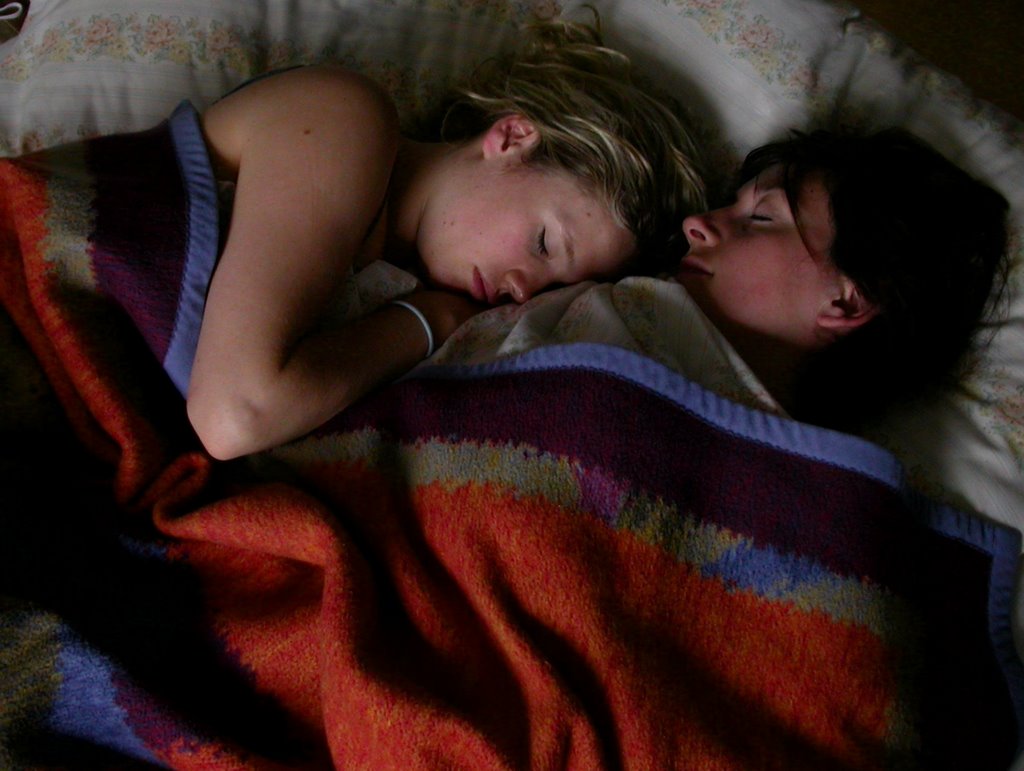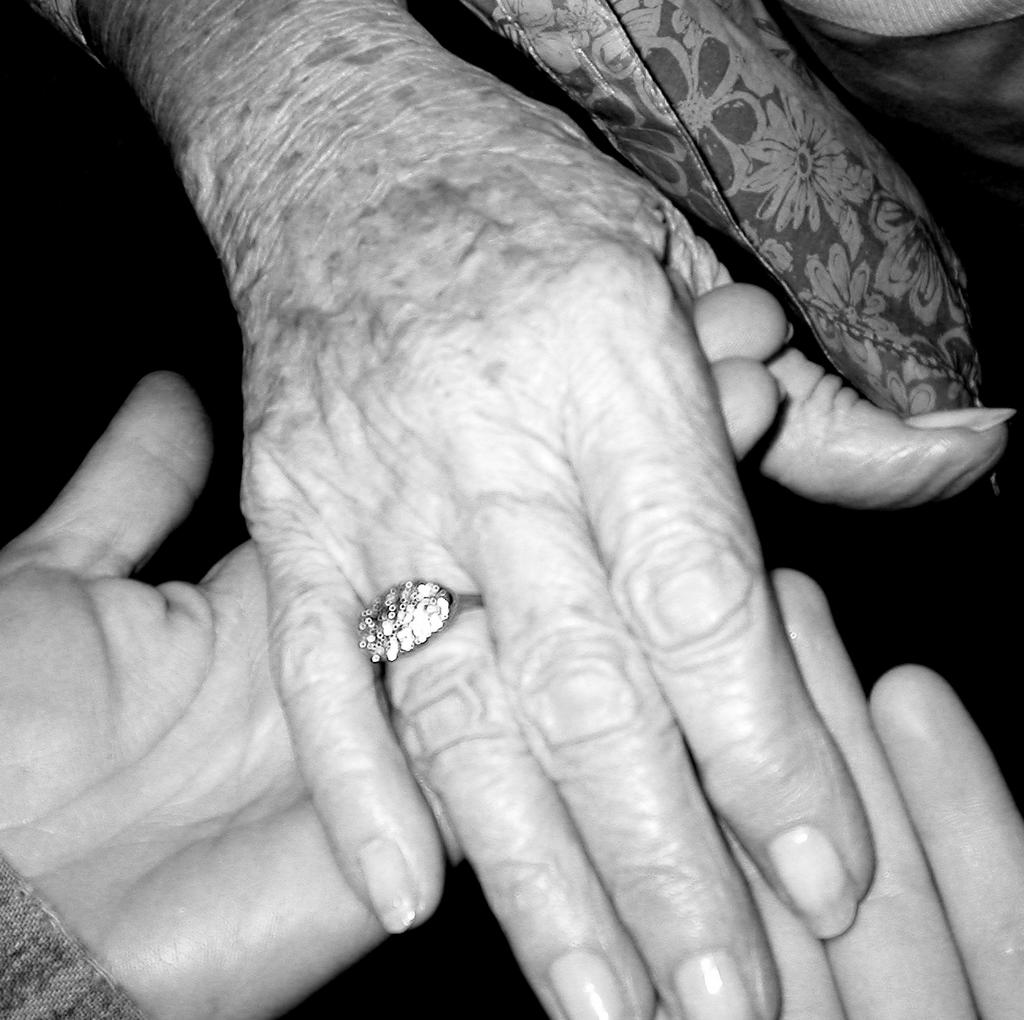
“Somehow I want an answer from my grandmother that will keep me from having to endure these indignities of age; I not only want to grow old gracefully but like a fiery goddess, a fierce warrioress...”
She must turn over the ring marked 109 on the hook in the hall before eleven in the morning or else she will not be able to stay here. She will have died, or be ill, or require too much assistance for the modest apartment she moved to last year, after the priest bought the home she’d spent decades in, and flattened it to make a parking lot. Good riddance, my sister and I say every time we drive by the smooth concrete, the house’s hauntings having been responsible for the way the place hangs on us, claustrophobic as the Ohio river air, hot as biscuits on a summer day, the sky cloudless, windless, pale, closing in where it meets the land. Our grandmother is the only reason we will usually make the trip here, factories and fast food having replaced fertile farming land, tobacco leaves plowed under for a paper plant that belches chemicals that inflict new cancers upon the people of this southern town.
“My angel!” she declares when she sees me, as she will say many times each day in this week I have come to live with her, the greeting she has given me since I was born. She tells me she was afraid I wouldn’t come, was hoping I wouldn’t have changed my mind, and just when she thought I had, she’d called my sister who assured her I was on the road, tangling my way through the corn fields and cemeteries of the Midwest, driving slow, just as she’d prayed I would. I’d left the stately university town where I’d dropped my daughter off for college, and began the trek south, past the Bait N Tackle shops, the barbecue joints, the places that sell cheap cigs and sugar doughnuts.
The radio dial had drifted to songs that declare ‘Praise to the Maker’, and talk shows where an announcer proposed unlikely trades for merchandise no longer desired: “She will give up a cee-ram-ick nay-tiv-it-tee set for a baby guinea pig. Just call and leave a message.” There are long lawns with dozens of cars in various states of disrepair, and trim lawns with plastic deer lined up just so. There are women with fat bottoms hauling weeds out of the garden, and teenagers in aprons smoking at the back door of the diner. Every so often there is a downtown with a Denny’s, a Sears and a church sign that announces a Hog Roast on Sunday. I am driving to Owensboro, Kentucky, the town she and I were born in, her in the year 1919, and I forty years later. She has lived here most of her life, except for the disastrous year she spent with my mother in a Florida retirement village, ending in a rescue that returned my grandmother to her Kentucky home, after driving all day in a van with my sisters and I until her old, tired legs went out from under her.
I do not want to be from this place; it is insular and thick with tradition. I consider myself most unlike a Southern woman, but in the few days I spend with my grandmother, I notice myself in many of her habits. We reach for our lipstick at the same time after lunch; she tells me how to drive just like I instruct my daughter from the ‘back seat’; she likes to tell stories that grow strands then circle round and this is what I do for my work.
She clears her schedule with me right up front: there is a card game at six each night, and she is required to go, or else the girls will not like it and look elsewhere for a fourth; each day at ten there will be Bob Barker, the name she calls the game show, and she can go somewhere if I want to then, but she does adore her Bob: “He’s a legacy.” I assure her I can make do during those events. Our first morning together she sneaks out of bed early and tiptoes down the hall in her robe to turn ring 109 before anyone has stirred so she can go back to bed, sleep late, then lounge around in her chair, eating breakfast and yelling prices at Bob. I love a woman who can manipulate the system for her own purposes.
One day her friend Mary joins us for Bob. The old women slap their knees when a young person wins at Bob Barker, and they are silent during the bidding, whispering their mathematical calculations, then laugh uproariously when someone guesses the correct price and jumps up and down. “That girl’s about to lose her britches,” Mary says, and my grandmother nods her head because she can’t hear her words. “Ever price she got right, ever one,” my grandmother says, thrilled in the victory as if it were her own.
And I realize this is not unlike how I chatter with my friend Diana, roaring our approval for the little guy during some march we have just come from: “I just sobbed when I came around the corner and saw the Women In Black,” I told her a few weeks ago, the activist carnival our game show, the place we, at midlife, remind ourselves we are vital, purposeful, mentally acute. Like the women in front of the TV screen, I am safely ensconced as an anonymous protester – no pink or black dress for me, no commitment has yet led me from the sidelines.
My grandmother surprises me with what is left of her sense of adventure. When I return from making a telephone call the television is playing hip hop at full volume because she is half deaf, and she is peering into the screen from her lounge chair, trying to understand. “Oh, it’s Regis and Kelly,” she says, explaining her choice, “She’s a doll compared to that other one,” pursing her lips and wrinkling her nose at the thought of the former host.
Then there are clear signs we are born a generation apart. I sneak out one night during her card game to visit the bookstore, where I buy the magazine “Bitch” for my daughter: it is our back to school ritual. Somehow describing the irony of taking back the word as a feminist would be lost on my grandmother, and so I hide my counterfeit in the plastic bag, folding back its cover as I read.
I show her slide shows on my Mac, and she is shocked when photos we have taken the day before appear on the screen. She remembers when her daddy’s horse and buggy tilled the fields and a ‘pitcher’ pump bringing spring water to the kitchen was a luxury. She talks of being so fortunate that she had two bathing suits, “One red and one white!” though they were hand me downs from a friend who was “right well-to-do.” I think of the full media libraries, the closets of toys, the drawers of clothing our family has owned, and wished I would have come earlier to hear her stories, that somehow her humility could have saved me some emotionally driven consumption.
One day after I arrive we go shopping, something she usually only gets to do on a bus with the other old and disabled, in metered segments of time parceled out as if they haven’t got much of it: Wednesdays they go to Foodland; ‘The K-Mark’, as she calls it, is just once each month. When we go to the hardware store, she will not allow me to carry a ceiling fan she wants to buy, even when I tell her I lift weights each week, for fun. She sends me on a mission for light bulbs then gets the man behind the counter to place the box in the cart. “Naw, angel, you’re going to hurt your back,” she insists, as if she has a direct line to God on this. When we sit down to eat, I learn that with her tender teeth, and wavering grip, every meal takes an hour or more. Her hands get ‘knots’ in them, especially in the winter months, and it can bring her depression and seclusion. One Thanksgiving, my husband, whom she secretly loves best – “we know the suffering of losing our mothers young, angel” – made paraffin baths to restore her hands after we arrived and found her peeling back a fish can with pliers that shook with her tremors. I cleaned the kitchen while he lowered her fingers into warm wax, whispering soothing words to let her know she had been set free.
The week that I listen to her stories, sleep on a ‘pallet’ on the floor and run errands with her, I become more forceful in the presence of her fragility, as if this aging thing is contagious. She does not want me to lift a laundry basket full of linens, and I pitch it onto my hip, throwing open the door with a free hand. She grabs my arm: “Do you know that when I first came here I dragged that basket down the hall with a belt? I liked to pass out, and they had to bring me back to the room.” I remember when she ran a pizza restaurant on her own, grinding mountains of mozzarella, sliding dozens of pies out of a huge oven with a long handled paddle. She didn’t pick up a golf club until her thirties, when her children were in school, and within a few years she was winning tournaments. In photos of her as a young woman she had the stylish agility of a fashion model, a proud carriage born of the memory of an elegant mother who died when she was twelve, but whose recollection informed every decision, every vision for her own life.
She tells me strength comes from hard work, and that she insists on cleaning her own apartment, so she can keep what vigor she has. When I take her grocery shopping it takes her half an hour to move down one aisle, and she can make it up two full aisles before she is ready to go put her feet up. “There’s not enough spaces to sit down in stores, angel,” she says, “If I could just rest a while I would be okay to go again.”
In forty years this may be my body, and I am not thrilled with being reminded of its rapid decay. I have already spent weeks walking my chemotherapy-logged husband around a cancer ward, and each moment since has been a careful hedge against physical frailty. My kitchen drawers are full of medicinal teas, vitamins and herbs; my calendar is full of plans for the future; I have a list of countries to visit that ought to last into my nineties. Somehow I want an answer from my grandmother that will keep me from having to endure these indignities of age; I not only want to grow old gracefully but like a fiery goddess, a fierce warrioress, burning kinetic energy until one day well into the future, I spontaneously combust into flaming ashes.
She tries to help me as I prepare our last meal together, and then steps back, watching me multi-task: “My Lans, you sure can do everything!” she says as I move from counter to stove to toaster to ‘icebox’ in her tiny kitchen. When we sit down at her table, after a lengthy blessing in which she asks for my protection on my travels, she leans over and tries to raise her glass, then sets it down again. I have poured too much iced tea in it for her to lift. “The worst thing about getting old is that you can’t take care of yourself,” she says. “And the best thing? What is that?” I ask, really wanting something that will keep me from having to imagine her death, and my own. “Angel, the best thing is being closer to God. Even all the time I have to sit on the stool* I can be talking to the Lord,” she says as she leans in, lowering her voice as if she is giving me the goods: “You can talk to Him most any time and He will answer your prayers. Even though it looks like it is taking me so long to do these things, and I don’t like it, well, I am devoting that time to God.” I bend my head and kiss her beautiful, trembling fingers, then memorize her poise as she lifts her tea with two hands.
*toilet, for the non Southerners